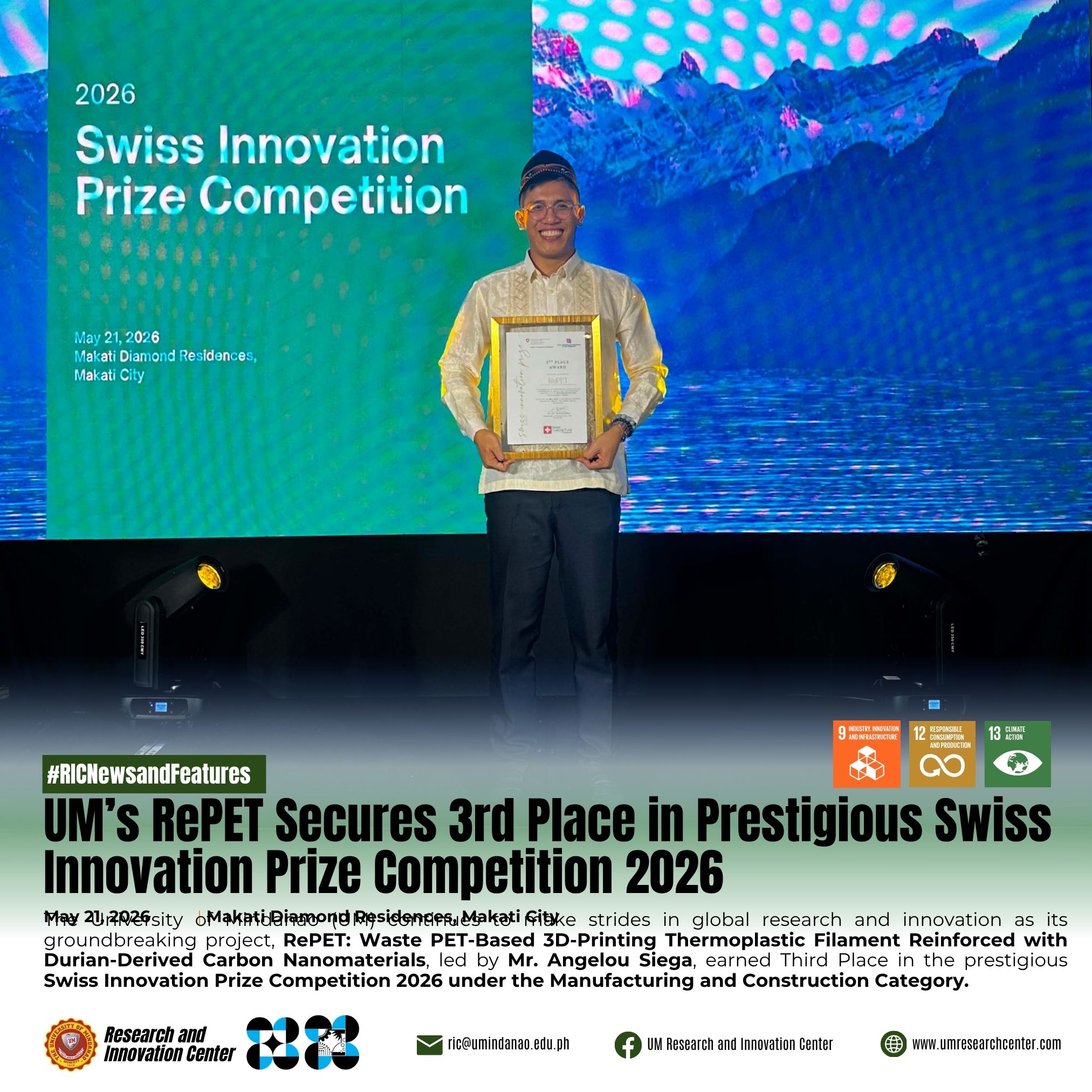
The University of Mindanao (UM) through its Research and Innovation Center (RIC) continues to make strides in research and innovation as its groundbreaking project, 𝘙𝘦𝘗𝘌𝘛: 𝘞𝘢𝘴𝘵𝘦 𝘗𝘌𝘛-𝘉𝘢𝘴𝘦𝘥 3𝘋-𝘗𝘳𝘪𝘯𝘵𝘪𝘯𝘨 𝘛𝘩𝘦𝘳𝘮𝘰𝘱𝘭𝘢𝘴𝘵𝘪𝘤 𝘍𝘪𝘭𝘢𝘮𝘦𝘯𝘵 𝘙𝘦𝘪𝘯𝘧𝘰𝘳𝘤𝘦𝘥 𝘸𝘪𝘵𝘩 𝘋𝘶𝘳𝘪𝘢𝘯-𝘋𝘦𝘳𝘪𝘷𝘦𝘥 𝘊𝘢𝘳𝘣𝘰𝘯 𝘕𝘢𝘯𝘰𝘮𝘢𝘵𝘦𝘳𝘪𝘢𝘭𝘴, earned Third Place in the prestigious Swiss Innovation Prize Competition 2026 under the Manufacturing and Construction Category today, May 21, 2026, in Makati City, Philippines.
The recognition places the University of Mindanao among recognized innovators advancing sustainable technologies and reinforces the growing capability of Filipino researchers to contribute solutions to pressing global environmental and industrial challenges.
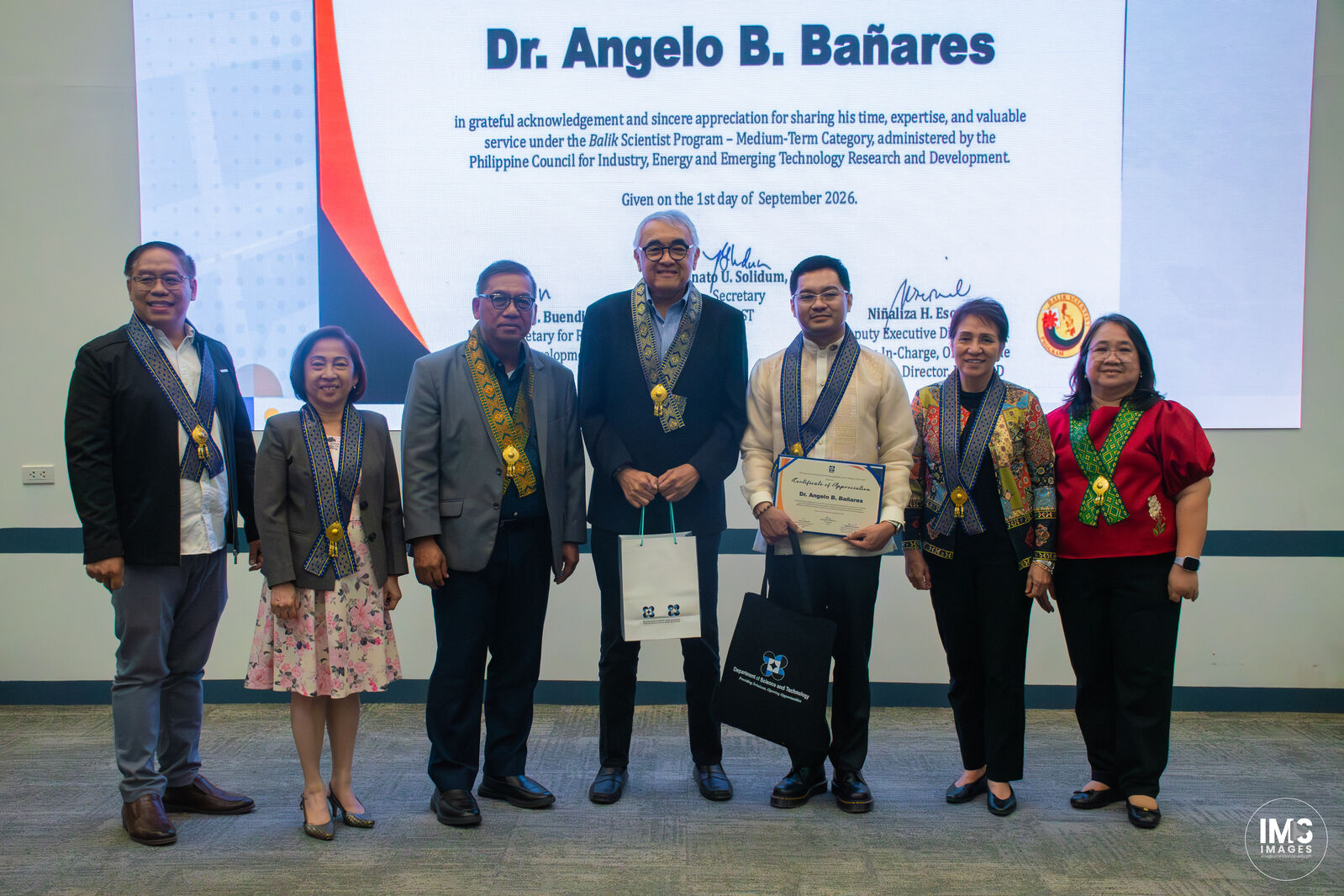
Led by 𝙈𝙧. 𝙈𝙖𝙧𝙠 𝘼𝙣𝙜𝙚𝙡𝙤𝙪 𝙎𝙞𝙚𝙜𝙖, the award-winning project is funded under the Department of Science and Technology – Philippine Council for Industry, Energy and Emerging Technology Research and Development (DOST-PCIEERD) through the Regional Research Institution (RRI) Program.
The achievement becomes even more notable as the Swiss Innovation Prize Competition 2026 reportedly received more than 140 entries from innovators and researchers, making RePET’s recognition a significant accomplishment for both the University of Mindanao and Philippine research innovation.
RePET was conceptualized to address two major waste management concerns in the Philippines: the increasing accumulation of post-consumer polyethylene terephthalate (PET) bottles that remain under-recycled and the large volume of durian rind waste generated across the Davao Region with limited value-added applications.
Through innovative materials engineering, the project transforms these locally abundant waste resources into reinforced thermoplastic filament for additive manufacturing or 3D printing applications. The technology utilizes recycled PET as the primary polymer matrix while incorporating graphene-like carbon nanomaterials extracted from durian rind as reinforcement material to improve mechanical and thermal properties. The innovation also presents potential conductivity advantages for advanced applications in manufacturing and construction industries.
The innovation likewise contributes to the attainment of the United Nations Sustainable Development Goals (SDGs), particularly SDG 9 on Industry, Innovation and Infrastructure, SDG 12 on Responsible Consumption and Production, and SDG 13 on Climate Action.
This recognition further highlights the University of Mindanao’s commitment to research excellence, sustainable innovation, and transformative technologies that respond to real-world challenges. It also demonstrates how locally grounded research initiatives can generate globally competitive solutions with meaningful environmental and industrial impact.
As UM continues to strengthen its research and innovation ecosystem, achievements such as RePET underscore the institution’s expanding role in advancing science, technology, and sustainability not only in the Philippines but also on the international stage.
Share this article

.png)
.png)