From Laboratory to Orchard: EcoSCENT Project Unites Scientists and Farmers in the Fight Against Fruit Fly Infestations
Bridging scientific innovation with community-based agriculture, the EcoSCENT Project recently strengthened its efforts toward sustainable pest management through a series of engagements with local agricultural stakeholders and mango farming communities in Digos City.
As part of the project's ongoing implementation, the EcoSCENT research team conducted a courtesy visit to the Office of the City Agriculturist of Digos City to discuss collaborative opportunities and secure support for upcoming field activities. The meeting served as a significant milestone in advancing the project's biotechnology-driven approach to pest management and fostering stronger partnerships with local government agencies.
The discussion focused on the project's innovative strategies for addressing one of the most persistent challenges faced by fruit growers—fruit fly infestations. Through the application of synthetic and engineering biology approaches, EcoSCENT seeks to develop sustainable, environmentally responsible solutions that can help protect crops while reducing dependence on conventional chemical-based pest control methods.
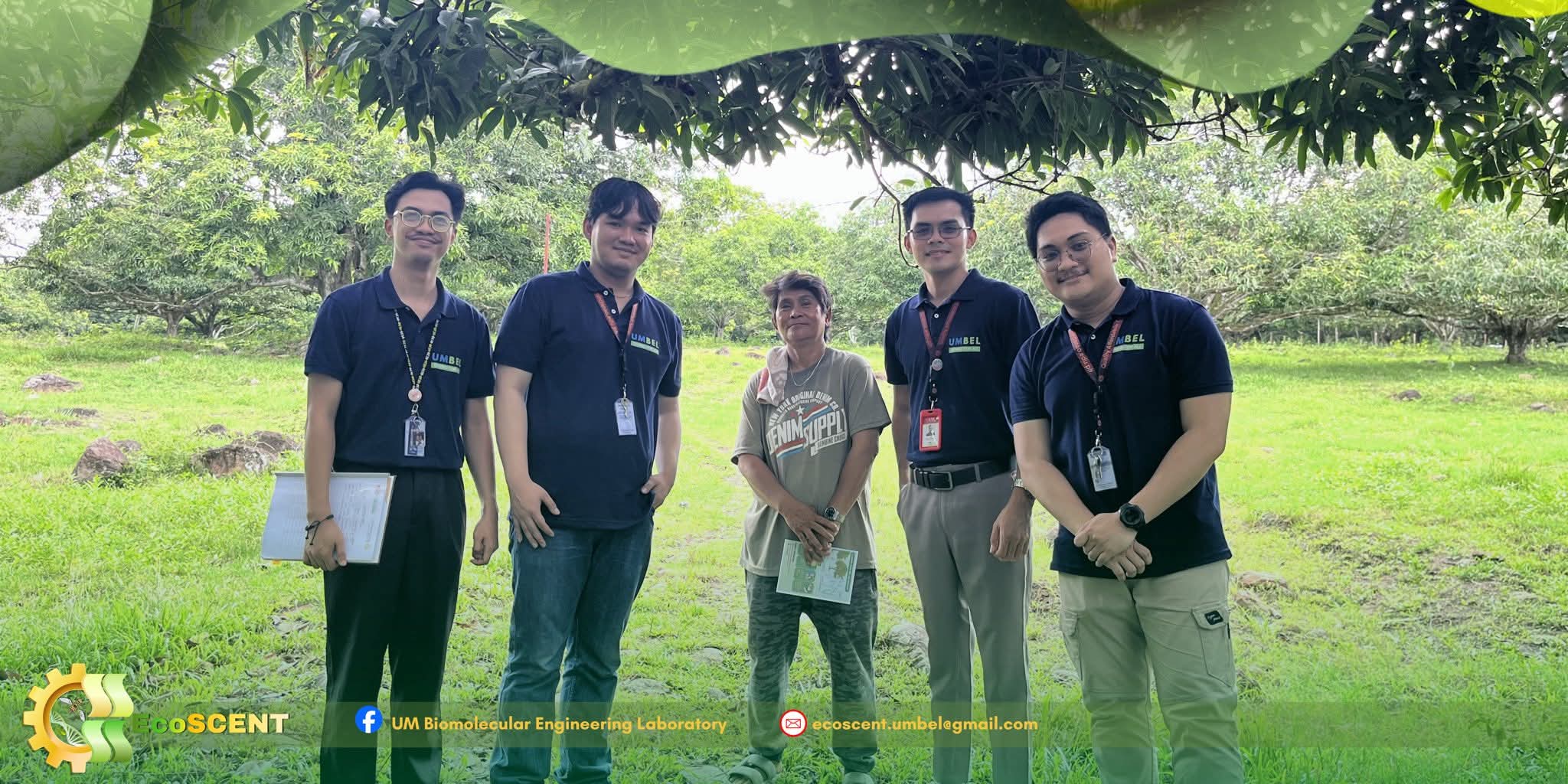
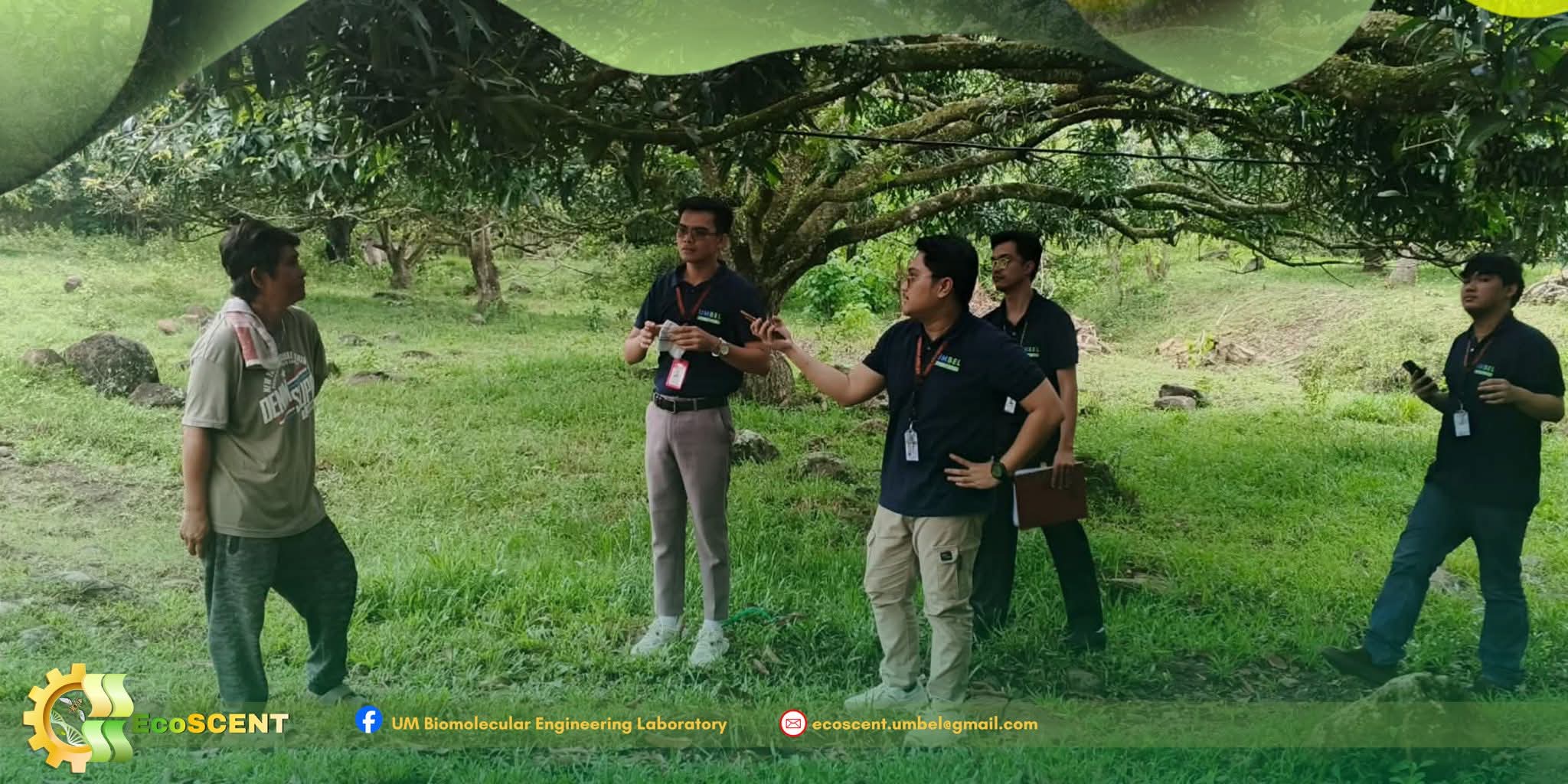
Following the courtesy meeting, the research team proceeded to the farming communities of Barangay San Roque and Barangay Lungag, where they engaged directly with local mango farmers. The field visit provided researchers with valuable insights into the realities faced by growers, including the economic and agricultural impacts of fruit flies and other pest-related challenges affecting mango production.
By listening to the experiences and concerns of farmers, the team gained a deeper understanding of the local context necessary for designing practical and farmer-centered solutions. The interaction also laid the foundation for future collaboration between researchers and agricultural communities, ensuring that scientific innovations are responsive to the actual needs of end users.
The EcoSCENT Project recognizes that sustainable agricultural innovation requires strong partnerships among researchers, government agencies, and farming communities. Through these engagements, the project aims to create a collaborative ecosystem where scientific research translates into tangible benefits for farmers and contributes to improved crop productivity and food security.
The team also expressed its gratitude to the Department of Agriculture Regional Crop Protection Center XI (RCPC XI) for its continued support, particularly to Mr. Virgelio Gutierrez, Chief of RCPC XI; Mr. Marlon Huelar, RCPC XI Researcher; and Mr. Arnold M. Casilac, Assistant City Agriculturist of Digos City. Their support and commitment have been instrumental in facilitating meaningful engagements with local stakeholders and farming communities.
As the project moves forward, EcoSCENT remains committed to advancing science-based, sustainable, and environmentally sound pest management solutions that empower farmers and strengthen agricultural resilience.
By bringing together biotechnology, research expertise, and community participation, the EcoSCENT Project demonstrates how innovation can drive positive change in agriculture—creating pathways toward greener farms, safer food systems, and a more sustainable future for Filipino farmers.
Share this article

.png)
.png)